
When we see a cat stretching lazily on the sofa, or a dog chasing a ball in the yard, have you ever wondered: what exactly are these little companions, who spend day and night by our side, thinking about? Do they experience emotions like we do? Do they dream? And could they even understand complex social relationships?
Do Dogs Really Feel Guilty?
Many dog owners have encountered this scene: a beloved slipper gets chewed up, and when you turn around, your dog looks “guilty”—ears back, tail tucked, eyes shifting, as if confessing a mistake.
However, scientists point out that this “guilty look” is not because dogs truly understand guilt, a complex secondary emotion. Animal behaviorists suggest that dogs are more likely responding to their owner’s tone of voice and body language. Through experience, they learn that when their owner is angry, displaying submissive behaviors can reduce the chance of punishment.
Surveys show that 74% of dog owners firmly believe their pets can feel guilt, but psychologists generally argue that guilt requires a level of self-awareness and cognition beyond what dogs possess. Basic emotions are well documented in dogs—playful joy, nervousness, or excitement—but evidence for secondary emotions, like pride or guilt, is still inconclusive.
In other words, when a dog lowers its head and tucks its tail, it’s really performing a “calming signal”—essentially saying, “I don’t want to be punished.” It’s more of a conditioned body language than true repentance.
Do Dogs and Cats Dream?
Beyond waking interactions, animal dreams are another fascinating subject. Research shows that, like humans, dogs and cats enter the rapid eye movement (REM) stage of sleep, when brain activity spikes dramatically.
Dogs may twitch their legs, whimper, or wag their tails in sleep. Researchers suggest their dreams often reflect daily experiences, such as playing with their owner or chasing small animals. Sometimes they even experience nightmares, crying out or whimpering in their sleep—at which point gentle comfort from the owner can quickly soothe them.
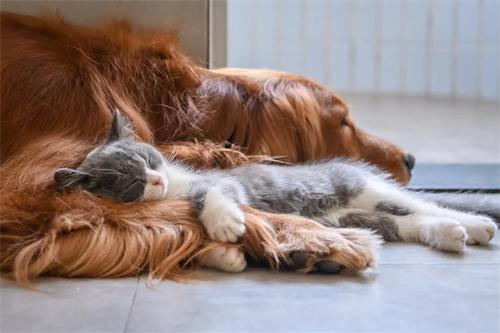
Cats, too, show rich dream behavior. During REM sleep, their ears flick, whiskers twitch, and paws jerk as if they’re hunting in their dreams. Because cats and dogs rely far more on smell than sight, scientists speculate their dreams are shaped more by scents and body movements rather than visual imagery like humans experience.
Interestingly, humans can distinguish dreams from reality—but whether animals are aware they are dreaming remains an unsolved mystery.
Why Do Cats Purr?
Almost every cat owner is familiar with the soothing “purr.” Kittens start purring while nursing, signaling comfort and safety to their mother. As adults, cats continue to purr when relaxed, petted, or well-fed.
But purring is not just a sign of happiness—it may also serve as self-healing. Studies show that the frequency of a cat’s purr ranges from 25 to 150 hertz, which can promote tissue regeneration and reduce pain. That’s why sick or injured cats may purr to ease discomfort.
However, not all purring is a “song of joy.” If purring suddenly becomes frequent, sounds unusual, or is accompanied by labored breathing, refusal to eat, or other symptoms, it may be a sign of illness, such as a respiratory infection or allergy. In such cases, careful observation is vital to tell whether it’s a sigh of contentment—or a call for help.
Do Animals Feel Ticklish?
Ticklishness may seem uniquely human, but many animals also react to light touches.
Dogs are most sensitive on their bellies, heads, and armpits; when lightly scratched there, they may kick their legs or wriggle with delight. Cats are even more sensitive, sometimes responding with licking, scratching, or squirming.
Experiments with rats are especially fascinating: when gently tickled, their brain’s touch centers activate, and they emit ultrasonic chirps resembling laughter. Interestingly, their ticklish response is closely linked to mood—happy rats are much more likely to “enjoy” being tickled.
From an evolutionary perspective, ticklishness may serve as an early-warning system, helping animals notice light but potentially harmful stimuli, such as parasites or insect bites.
Are Pigs Really Dumb?
When people think of pigs, “lazy” and “greedy” often come to mind. Yet scientific studies have overturned this stereotype. Cambridge University research found that pigs could learn and remember ten different symbols within three days, a learning ability comparable to a four-year-old child. Their average IQ, estimated at 70–85, places them among the smartest animals.
Pigs can even pass the famous “mirror test”—a measure of self-awareness that only a handful of species, such as elephants and chimpanzees, can achieve. In experiments, pigs successfully used mirrors to locate hidden food, averaging just 23 seconds to solve the task.
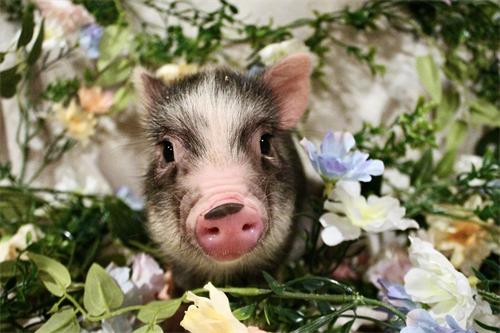
In maze studies, pigs displayed remarkable spatial memory and teamwork. Alone, they took longer to find exits, but in groups, they divided roles—some explored, others marked hazards—achieving far greater efficiency.
Beyond intelligence, pigs also have rich emotional lives. German researchers found that mother pigs can interpret their piglets’ calls with striking accuracy. When companions are happy, pigs wag their tails and squeal excitedly; when distressed, they scream and scatter, showing clear empathy.
Farm studies in Brazil also reveal that over 80% of farmers believe pigs have distinct personalities—some curious, some stubborn—and that they can express more than 20 types of emotion through vocalizations. Clearly, pigs are far more intelligent and emotionally complex than most people assume.
Do Cows Have Friends?
The answer is yes. Cows are highly social herd animals that communicate through scent, sight, and sound, forming stable social bonds.
When a cow is separated from its companions, others may show anxiety and restlessness, often calling out in distress. When reunited, they lick each other’s faces as a sign of closeness—similar to a human hug.
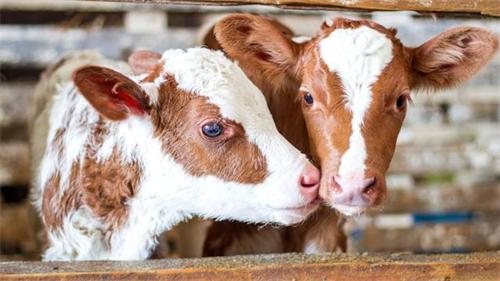
Studies show that cows often help companions in difficulty, suggesting a level of empathy. While hierarchies exist within herds, social ties are shaped more by individual preferences than strict rank. In other words, cows can form genuine “friendships,” not just instinctive group bonds.
The Hidden Corners of the Animal World
Like humans, animals have their own emotions, cognition, and social lives. When we live with pets, we often focus only on their cuteness and companionship, while overlooking their complex inner worlds. By learning more about these secrets, we not only care for them better, but also realize that the bond between humans and animals runs far deeper than we may have ever imagined.
Recommend:

Welcoming Birds to Your Garden: Five Proven Methods for Year-Round Attraction
Autumn Rabbit Care: How to Adjust Diet, Environment, and Health Practices for Your Bunny
Scientific Insights into Cat Diets: Tailoring Nutrition by Age, Breed, and Health Condition

More Than Companions: What Our Pets Reveal About Modern Life and Values