The bond between humans and dogs dates back more than 20,000 years. In those early days, dogs were not yet fully domesticated, but they began living alongside people, sharing food and gradually becoming inseparable companions in daily life. As human society evolved, so did the development of dog food, undergoing several major transformations.
In 1860, the first commercial dog food was introduced. The recipe was simple—mainly flour, vegetables, and meat—designed primarily to satisfy hunger rather than optimize nutrition.
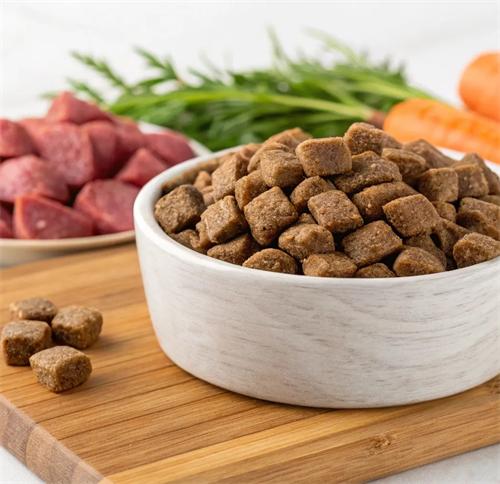
By 1957, extruded dog food (what we know today as kibble) emerged. Produced through high-temperature extrusion, it provided more balanced nutrition, was easy to store, and simplified feeding, saving owners significant time.
Fast forward to 2016, freeze-drying technology—originally developed for astronaut meals—was applied on a large scale in pet food production. This process allowed dogs to enjoy a diet much closer in texture and nutritional quality to raw food while minimizing health risks.
From rough, basic recipes to today’s specialized, scientifically formulated products, the evolution of dog food reflects a growing human concern for pet health and wellbeing.
Feeding and Nutrition: A Universal Conversation
When pet owners gather, the conversation often revolves around similar themes: “How’s your dog doing lately?”, “What do you usually feed him?”, “Have you tried adding any special supplements?”
Nowadays, many owners are no longer satisfied with simply making sure their dogs eat enough. Instead, they focus on whether their pets are eating well. Issues like picky eating, balanced nutrition, and variety in taste have become central topics. Against this backdrop, raw feeding and freeze-dried dog food have emerged as some of the most debated approaches in recent years.
Raw Feeding: Back to Basics or a Hidden Danger?
1. Looking Back at Wolves’ Diets
Dogs are descended from gray wolves, who survived primarily through hunting. Their diet consisted largely of raw meat, organs, and bones. From a biological standpoint, the digestive systems of dogs are still capable of processing raw meat. However, thousands of years of domestication have created significant differences between household pets and wild wolves, especially in terms of dietary needs and digestion.
2. The Pros and Cons of Raw Meat
Advantages:
l Rich in protein and fat, which supports growth and development.
l Retains certain vitamins and natural enzymes, theoretically closer to a “natural” diet.
l For picky eaters, raw meat is often more appealing due to its strong aroma and taste.
Risks:
l Safety concerns: Raw meat can harbor bacteria (like salmonella), viruses, or parasites. If the source is questionable or storage is improper, serious health problems can arise.
l Nutritional imbalance: A diet made up only of raw meat may lack calcium, phosphorus, or key vitamins, posing risks particularly to senior dogs, pregnant dogs, or those with health issues.
l Health burden: High-fat diets can increase the risk of obesity and pancreatitis. Hard bones in raw meat may also injure the intestines or cause blockages.
l Behavioral concerns: The smell of raw blood may stimulate hunting instincts, making dogs more excitable or even destructive.
In summary, raw feeding is not inherently bad, but it requires fresh, contaminant-free, and carefully inspected meat sources. Only under professional nutritional guidance and with properly balanced recipes can it be considered safe.
Freeze-Dried Dog Food: Striking a Balance Between Science and Nature
1. What Exactly Is Freeze-Dried Food?
Freeze-dried dog food is made from raw meat that undergoes a unique process:
l First, ingredients are rapidly frozen until solid.
l Then, under a vacuum, water is removed through low-temperature sublimation.
l This method preserves most proteins, vitamins, and enzymes while minimizing bacterial growth.
The result is food that offers the nutritional benefits of raw meat but with far lower health risks.
2. Complete Meals vs. Treats
l Complete Freeze-Dried Meals: These are made from whole raw meat and bones, with added vitamins and minerals. They can serve as a daily diet.
l Freeze-Dried Treats: Often just single-ingredient meat chunks or organs, designed as training rewards or occasional snacks.
3. Benefits of Freeze-Dried Food
l High nutrient retention: Vitamins remain over 95% intact, which is ideal for dogs with sensitive dietary needs.
l Long shelf life: With less than 5% moisture, freeze-dried foods resist spoilage and can be stored at room temperature.
l Excellent palatability: Once rehydrated, the aroma is strong and appetizing, encouraging picky eaters to finish their meals.
l Convenience: Lightweight and portable, perfect for travel, with sealed packaging that prevents leaks.
Efficient digestion: With an absorption rate of around 90%, feeding amounts can be reduced by about a third compared to kibble, meaning the higher price may balance out in the long run.
4. Drawbacks of Freeze-Dried Food
l High cost: Producing 1 kg of freeze-dried food requires around 8 kg of fresh meat, making it expensive, especially for multi-dog households.
l Nutrient inconsistencies: Some products may lack sufficient vitamins and minerals. Feeding only freeze-dried food long-term could lead to issues like urinary stones or weakened immunity.
l Variable quality: Cheaper brands may dilute the product with starches or use low-grade meat.
l Hydration risks: If not adequately rehydrated, the extremely low moisture content may place strain on the kidneys and urinary tract.
5. How to Choose Quality Freeze-Dried Food
l Protein levels: Ideally between 24%–28%. Too little weakens immunity, while too much can stress the kidneys.
l Clear sourcing: Labels should specify meat types and proportions, with fresh meat prioritized over meat meal.
l Lab testing: Look for certificates confirming safety and absence of pathogens.
l Rehydration performance: Foods that rehydrate to a smaller volume usually contain more real meat and less starch.
Wet vs. Dry Food: Which Is Better for Your Dog?
Aside from raw and freeze-dried diets, many owners still face the classic dilemma of wet food versus dry food.
1. Dry Food (Kibble)
Pros:
l Less than 10% moisture, easy to store long-term.
l Crunchy texture helps scrape plaque and maintain dental health.
l Produces firm, easy-to-clean stools.
Cons:
l Prolonged exclusive feeding may contribute to mild dehydration. Dogs need extra water intake to compensate.
2. Wet Food (Canned or Pouched)
Pros:
l Contains over 70% moisture, making it more hydrating.
l Soft texture and strong aroma appeal to picky eaters and dogs with dental issues.
l High digestibility and palatability.
Cons:
l More expensive than kibble.
l Short shelf life once opened.
l High-fat recipes may cause diarrhea in sensitive dogs.
3. Which One Wins?
There is no universal answer. In fact, many veterinarians recommend combining wet and dry foods to strike a balance between hydration, dental health, nutrition, and cost.
The Key to Scientific Feeding: Observation and Adjustment
When trying new foods, it’s best to start small—purchase smaller packages and test them over a 2–3 week period. During this trial, pay attention to:
l Appetite: Is your dog eating willingly?
l Digestion: Any vomiting or diarrhea?
l Stool quality: Are the stools well-formed, with a normal color?
Equally important is how you store the food:
l Dry food should be sealed tightly to avoid moisture or contamination.
l Wet food, once opened, should be refrigerated and consumed quickly.
Only through careful testing and ongoing observation can you find the diet that suits your dog best.
The Best Food Is the One That Fits
Raw diets emphasize a “natural” approach, freeze-dried foods offer a safe balance of raw nutrition and convenience, kibble provides storage and cost benefits, and wet food delivers palatability and hydration. No single option is the perfect answer for every dog.
The best dog food is always the one that matches your dog’s needs—considering age, health status, activity level, taste preference, and your family’s budget and lifestyle. With smart combinations, moderation, and attentive observation, you can ensure your dog not only eats enough, but eats well—nourished, happy, and healthy.
Recommend:

Designing a Scientific Hamster Habitat: Safe, Enriched, and Behaviorally-Appropriate Spaces

Avian Nutrition and Feeder Science: Optimizing Diets and Funnel Feeders for Wild and Captive Birds

Practical Strategies for Exotic Pet Climate Control: Humidifiers, Dehumidifiers, and Thermoregulation

The Hidden Signs of Pet Stress: Is Your Home Environment Affecting Them?