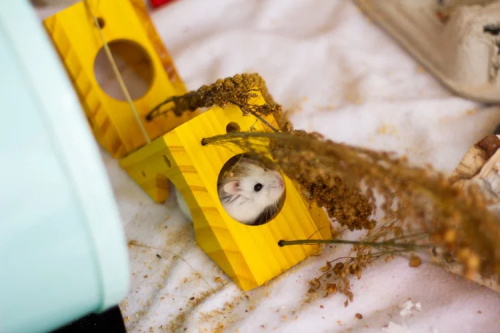
Hamsters have become one of the most commonly kept pocket pets across the globe. Their tiny bodies, curious temperaments, and playful nature make them appealing companions for people who want a small but engaging animal in the household. Yet, despite their popularity, many hamsters are housed in environments that fall short of meeting their biological and psychological needs. Unlike cats and dogs, which benefit from a long history of domestication and established care standards, hamsters are still often kept in cages designed more for human convenience than for animal welfare.
Understanding Hamster Natural Behavior
Before discussing habitat design, it is essential to recognize that hamsters are not simply “cute rodents in a cage.” They are small, nocturnal mammals with highly specialized behaviors shaped by their evolutionary history.
- Burrowing Species: In the wild, Syrian hamsters (*Mesocricetus auratus*) and dwarf hamsters dig extensive burrow systems, often exceeding one meter in depth. These burrows regulate temperature, humidity, and provide protection from predators.
- Nocturnal Activity: Hamsters are primarily active at night. They run long distances—studies show Syrian hamsters may travel up to 5–10 kilometers in a single night.
- Food Hoarding: Their cheek pouches are adapted to store and transport food to hidden caches.
- Territoriality: Especially in Syrians, solitary housing is crucial to prevent fighting and stress.
- Gnawing and Exploration: Their continuously growing incisors require gnawing materials, while their natural curiosity drives them to explore and manipulate their environment.
Recognizing these behaviors highlights the importance of deep bedding for digging, large wheels for running, safe gnawing objects, and space for food storage. A cage that fails to meet these needs risks creating an animal that is bored, stressed, or unhealthy.
Core Elements of a Scientific Hamster Habitat
1. Cage Size and Layout
Scientific animal welfare guidelines consistently emphasize that many commercial cages are too small. While pet store cages may market themselves as “starter homes,” they often fail to meet the basic movement and burrowing needs of hamsters.
Minimum Recommendations:
- For Syrian hamsters: 6000–8000 cm² (about 80 × 50 cm floor space).
- For dwarf hamsters: 4000–5000 cm² (about 70 × 40 cm floor space).
- Height: Sufficient depth (at least 40–50 cm) is essential for bedding and burrowing. Tall cages with excessive vertical climbing opportunities should be avoided because falls can cause serious injury.
Optimal Design Principle: Prioritize horizontal space and substrate depth over vertical climbing structures. A broad, low cage mimics the ground-dwelling lifestyle of hamsters.
2. Bedding Depth and Substrate Science
One of the most critical aspects of hamster welfare is thick bedding. Shallow bedding layers, often less than 5 cm in commercial cages, prevent hamsters from performing their instinctive digging behaviors.
- Scientific Basis: Research on laboratory and pet hamsters shows that bedding depths of 20 cm or more significantly increase burrow construction and reduce stress-related behaviors.
- Recommended Depth: At least 20–30 cm for dwarf hamsters and up to 40 cm or more for Syrian hamsters.
- Substrate Types:
- Paper-based bedding: Soft, absorbent, and safe.
- Aspen shavings: Acceptable if dust-free.
- Mixing materials (hay, shredded paper, wood pulp) helps tunnels stay stable.
Why It Matters: Providing a deep substrate allows hamsters to construct multi-chamber burrows similar to those in the wild—complete with nesting rooms, food storage chambers, and latrines. This activity supports both mental stimulation and physical health.
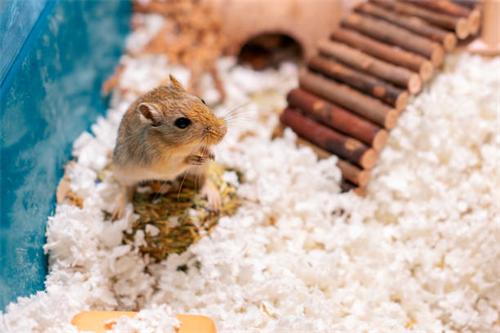
3. Running Wheels: Quiet, Large, and Safe
Hamsters have a natural drive for long-distance running. Without a suitable outlet, they may develop stereotypic behaviors (e.g., repetitive bar chewing).
- Wheel Size:
- Syrian hamsters: at least 28–30 cm in diameter.
- Dwarf hamsters: at least 20 cm in diameter.
Wheels that are too small cause unnatural spinal curvature and back injuries.
- Design:
- Solid running surface (no wire rungs, which can injure feet).
- Quiet bearings to minimize stress for both hamster and owner.
- Sturdy attachment to prevent tipping.
Optimal Choice: A quiet, large, solid-surface wheel provides safe exercise and satisfies the hamster’s instinct to roam at night.
4. Safe Spaces and Nesting Areas
Hamsters need multiple safe zones within their enclosure where they can hide, sleep, and store food. In the wild, they create chambers for resting, hoarding, and raising young.
- Nest Boxes: Wooden or cardboard houses with multiple entrances mimic natural burrow chambers.
- Hiding Tunnels: Cork logs, paper tubes, and ceramic shelters encourage exploration and provide shelter.
- Nesting Material: Unscented, paper-based nesting material is safest; avoid cotton fluff, which can tangle limbs.
Providing layered safety—deep burrows plus surface-level hides—helps reduce stress and supports natural behavior.
5. Environmental Enrichment
Enrichment is not optional; it is an essential part of habitat science. A bare cage may keep a hamster alive, but an enriched habitat keeps it mentally and physically healthy.
- Chew Items: Natural wood, untreated cardboard, and hay-based toys keep teeth healthy.
- Foraging Opportunities: Scatter-feeding or using puzzle feeders replicates natural food-seeking behavior.
- Digging Zones: Sand baths (using chinchilla sand, not dust) allow natural grooming.
- Climbing and Exploration: While vertical climbing should be limited, platforms and tunnels allow spatial variety.
6. Safety Considerations
Wire flooring: Can cause bumblefoot and injuries. Use solid surfaces instead.
Plastic tubes: Poor ventilation, difficult to clean, and risk of entrapment.
Sharp edges or loose parts: Risk of injury or ingestion.
Unsuitable substrates: Pine or cedar shavings release aromatic oils harmful to respiratory health.
Scientific Principle: Every enrichment or accessory should be assessed for both physical safety and behavioral appropriateness.
Hamster Science Home Construction Guide
Based on the scientific foundations above, here is a step-by-step guide for designing a behaviorally-appropriate hamster home.
Step 1: Choose the Right Enclosure
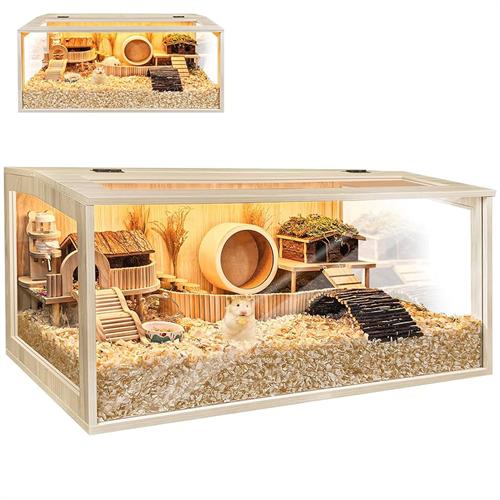
- Select a large glass tank, DIY wooden habitat, or high-quality commercial cage with horizontal floor space of at least 6000 cm².
- Ensure at least 40 cm height to allow deep bedding.
Step 2: Install Thick Bedding
- Fill at least half the enclosure depth with a 20–40 cm layer of mixed substrate.
- Create a gradient—thicker in one area for burrowing, thinner in another for food dishes and sand baths.
Step 3: Add a Quiet, Proper-Sized Wheel
- For Syrians: 28–30 cm diameter.
- For dwarfs: 20 cm diameter.
- Choose a solid surface, silent-running wheel with stable support.
Step 4: Build Safe Spaces
- Place a multi-chamber wooden house at bedding level, partially buried for natural effect.
- Add ceramic hides or cork tunnels at different cage corners.
- Provide paper-based nesting material.
Step 5: Incorporate Enrichment and Foraging
- Scatter-feed daily to encourage food searching.
- Rotate chew toys and cardboard boxes weekly.
- Add a sand bath for grooming and digging enrichment.
Step 6: Ensure Safety and Maintenance
- Avoid plastic tubes, wire mesh, and aromatic woods.
- Clean spot areas daily but avoid complete bedding changes too frequently, as this disrupts food stores and scents.
- Deep-clean every 6–8 weeks, keeping part of the old bedding to maintain familiar smells.
Common Myths vs. Scientific Reality
1. “Small cages are fine because hamsters are small.”
→ False. Hamsters may be small, but their natural roaming range covers kilometers. Space is about behavior, not body size.
2. “Wheels are optional.”
→ False. Running wheels are essential for physical health and behavioral expression.
3. “Hamsters don’t need deep bedding if they have a house.”
→ False. Burrowing is instinctive; without it, stress levels rise.
4. “Cage cleaning should mean full bedding replacement weekly.”
→ False. Frequent total cleanouts erase scent markers and cause stress. Spot cleaning is preferable.
Final Thoughts
Designing a hamster habitat is not just about providing shelter—it is about respecting the biology, behavior, and sensory world of these small animals. By integrating scientific research into pet care, owners can create environments that allow hamsters to thrive, not just survive.
When we align our care with natural behaviors, we fulfill both ethical responsibility and scientific understanding. Hamsters may be small, but their needs are not. A scientifically designed habitat ensures that these captivating creatures live enriched lives, reflecting the best practices of modern pet care science.
Recommend:
Designing a Scientific Hamster Habitat: Safe, Enriched, and Behaviorally-Appropriate Spaces
Designing Sustainable Habitats: Integrating Clean-Up Crew, Circulation, and Natural Vegetation

The Hidden Signs of Pet Stress: Is Your Home Environment Affecting Them?
The Complete Guide to Parrot Enrichment: Safe Toys, Training Techniques, and Social Strategies