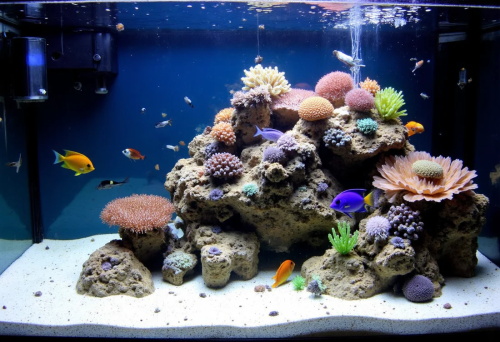
Maintaining a marine aquarium is a task that blends biology, chemistry, and engineering into one continuous practice. For beginner aquarists, success often lies in keeping hardy fish alive and maintaining a stable salinity. For advanced aquarists, however, especially those dedicated to reef aquariums, the responsibilities increase dramatically. A thriving reef tank is not merely a decorative water box—it is a living ecosystem where corals, fish, invertebrates, and countless microscopic organisms interact. Success requires mastering the principles of water chemistry, understanding coral physiology, and developing strategies to balance biological processes over years rather than weeks.
1. The Foundation: Water Quality in Reef Aquariums
Water quality is the single most important determinant of reef tank success. Unlike freshwater aquariums, where fish can adapt to a range of conditions, corals and marine invertebrates demand precision and stability.
1.1 Salinity and Specific Gravity
- Target Range: 1.025–1.027 specific gravity (35 ppt salinity).
- Importance: Corals, clams, and invertebrates rely on osmotic balance. Fluctuations of even 1–2 ppt can stress sensitive species such as Acropora.
- Professional Technique: Use a refractometer calibrated with reference solution, not just distilled water. Automated top-off (ATO) systems with freshwater reservoirs prevent salinity swings caused by evaporation.
1.2 Temperature Stability
- Target Range: 24–26 °C (75–79 °F).
- Why it Matters: Coral reefs in the wild operate within narrow temperature margins. Chronic overheating accelerates coral bleaching by destabilizing zooxanthellae (symbiotic algae).
- Professional Technique: Employ redundant heaters and chillers linked to an aquarium controller. Avoid single-point failures by using multiple smaller heaters rather than one large one.
1.3 pH, Alkalinity, and Carbonate Balance
- pH Target: 8.1–8.4.
- Alkalinity Range: 7–10 dKH.
- Mechanism: Corals depend on bicarbonate ions (HCO₃⁻) to build calcium carbonate skeletons. Sudden drops in alkalinity lead to slowed growth and weakened coral structure.
- Professional Technique: Advanced aquarists use kalkwasser reactors or calcium reactors to maintain carbonate hardness automatically, preventing large fluctuations.
1.4 Calcium and Magnesium
- Calcium Range: 400–450 ppm.
- Magnesium Range: 1250–1350 ppm.
- Interaction: Magnesium acts as a buffer, preventing calcium carbonate from precipitating prematurely. Without sufficient magnesium, calcium supplementation becomes unstable.
- Professional Technique: Use two-part dosing systems (calcium chloride and sodium bicarbonate solutions) or automated dosing pumps to deliver consistent mineral levels.
1.5 Nutrient Control: Nitrate and Phosphate
- Nitrate Target: <5 ppm for SPS corals; <10 ppm for mixed reefs.
- Phosphate Target: 0.02–0.05 ppm.
- Balance Principle: Nutrients are essential in trace amounts. Starvation leads to pale corals, while excess fosters algae blooms and cyanobacteria.
- Professional Technique: Advanced aquarists use refugiums with macroalgae, protein skimmers, and controlled carbon dosing (e.g., vinegar or vodka) to regulate nitrate/phosphate ratios.
2. Coral Health: Physiology, Nutrition, and Stress Management
Corals, unlike fish, are sessile animals that rely on both symbiotic algae and heterotrophic feeding for survival. Their health is influenced by light, water chemistry, flow, and food availability.
2.1 Light Spectrum and Intensity
- Photosynthetic Needs: Zooxanthellae within coral tissues require blue-dominant light (400–500 nm) for photosynthesis.
- Professional Tools: High-end LED systems allow fine-tuning of spectrum and intensity, simulating sunrise, sunset, and lunar cycles.
- Common Mistake: Over-lighting. Too much PAR (photosynthetically active radiation) can bleach corals by expelling zooxanthellae.
2.2 Flow Dynamics
- Importance: Adequate water movement delivers oxygen and nutrients while removing waste products.
- Flow Recommendations: SPS corals prefer turbulent, high-flow environments; soft corals thrive in moderate currents.
- Professional Technique: Use programmable wavemakers to create randomized flow, mimicking natural reef turbulence rather than constant directional streams.
2.3 Coral Nutrition
- Autotrophy vs. Heterotrophy: While photosynthesis provides baseline energy, corals also feed on dissolved organics, plankton, and particulate matter.
- Professional Feeding Practices: Target-feeding SPS corals with rotifers or reef roids; dosing amino acid supplements for tissue repair and coloration.
- Scientific Insight: Research shows that corals fed supplemental plankton grow faster and resist bleaching more effectively than those relying solely on light.
2.4 Stressors and Disease Management
- Common Stressors: Rapid parameter swings, allelopathy (chemical warfare between corals), and pests such as Aiptasia or flatworms.
- Professional Preventive Practice: Quarantine new coral frags, dip in iodine or commercial coral dips, and observe for parasites before tank introduction.
- Long-Term Strategy: Maintain biodiversity with cleaner shrimp, wrasses, and natural predators that control pests biologically.
3. Ecosystem Management: Beyond Individual Parameters
A reef aquarium is not simply a collection of corals and fish—it is a closed ecosystem with interdependent relationships. Advanced aquarists focus not only on water chemistry but also on the invisible web of bacteria, microfauna, and nutrient cycling that governs long-term stability.
3.1 Microbial Balance and the Nitrogen Cycle
- Foundation: Beneficial bacteria convert toxic ammonia → nitrite → nitrate.
- Advanced Concept: Beyond the nitrogen cycle, mature reef tanks support diverse microbial consortia that aid coral immunity and outcompete pathogens.
- Professional Technique: Use live rock or bio-media with high surface area to cultivate microbial populations. Avoid excessive sterilization, which disrupts microbial diversity.
3.2 The Role of Refugiums
- Macroalgae (Chaetomorpha, Caulerpa): Absorb excess nitrates and phosphates.
- Microfauna: Copepods and amphipods raised in refugiums provide natural coral and fish food.
- Professional Setup: Reverse light cycle refugiums stabilize pH by counteracting nighttime CO₂ buildup.
3.3 Biological Interactions and Stocking Balance
- Fish-Coral Compatibility: Some fish (e.g., angelfish, butterflyfish) may nip corals. Advanced aquarists plan stocking to avoid destructive interactions.
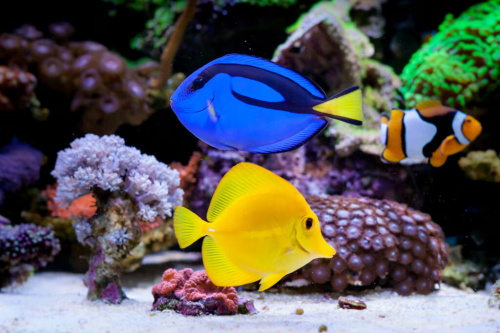
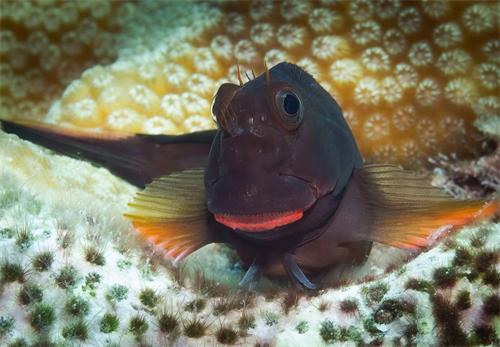
- Herbivores and Grazers: Tangs, blennies, and snails help control nuisance algae.
- Predator–Prey Dynamics: Maintaining a small but stable population of detritivores (bristle worms, micro-crustaceans) enhances ecosystem resilience.
3.4 Long-Term Maintenance Strategies
- Stability Over Perfection: Advanced reef-keepers recognize that chasing “perfect” parameters often causes more harm than good. Stability is key.
- Automated Systems: Dosing pumps, automated top-offs, and controllers reduce human error and maintain consistency.
- Routine Testing and Logging: Professional aquarists keep detailed records of parameters, coral growth rates, and maintenance schedules to identify long-term trends.
4. Troubleshooting Common Advanced Reef Problems
Even experienced aquarists encounter setbacks. Knowing how to identify and resolve problems quickly is vital.
4.1 Algae Blooms
- Cause: Excess nutrients or imbalanced light spectrum.
- Solution: Increase nutrient export (refugium, skimmer), reduce feeding, and adjust light intensity.
4.2 Coral Bleaching
- Cause: Temperature spikes, light shock, or unstable water chemistry.
- Solution: Lower light intensity gradually, improve flow, stabilize alkalinity, and feed corals directly during recovery.
4.3 Cyanobacteria (Red Slime)
- Cause: Excess phosphate, low flow zones, or bacterial imbalance.
- Solution: Increase circulation, reduce phosphate via GFO media, and enhance microbial diversity through probiotic dosing.
4.4 Pests and Parasites
- Examples: Flatworms, nudibranchs, Aiptasia anemones.
- Solution: Manual removal, coral dips, or introduction of natural predators such as peppermint shrimp.
5. The Philosophy of Advanced Reefkeeping
At the advanced level, marine aquarium maintenance becomes less about reacting to problems and more about ecosystem philosophy. Reef aquarists are custodians of miniature oceans, responsible for balancing complexity in a closed environment. The most successful tanks thrive because their keepers understand that biology, chemistry, and physics intersect constantly.
Rather than striving for quick fixes, advanced aquarists adopt a systems-based mindset: every adjustment in nutrient dosing, lighting, or stocking has ripple effects. The best practice is patience, observation, and incremental change.
Recommend:
Designing Sustainable Habitats: Integrating Clean-Up Crew, Circulation, and Natural Vegetation

The Gen Z Pet Parent: Why 70% of This Generation Owns Multiple Pets

Supporting Your Dog’s Gut Health: Probiotics, Products, and Homemade Recipes

Freeze-Dried vs. Raw: Navigating the World of Premium Dog Treats