In nature, reptiles rely on the sun as their primary source of light. The sun not only provides warmth but also conveys information about time and seasonal changes through the rhythmic variations of daylight. Reptiles interpret changes in light intensity and duration to distinguish between day and night, as well as between different seasons. These environmental cues, in turn, regulate their activity, feeding, reproduction, and periods of dormancy or hibernation.
However, once reptiles are kept in artificial enclosures, replicating natural lighting conditions becomes a major challenge. Standard indoor lamps cannot substitute for the full spectrum of sunlight, nor can they provide the ultraviolet and infrared wavelengths essential to reptile health. Therefore, one of the most critical tasks in reptile husbandry is to recreate a scientifically accurate lighting environment that mimics the conditions these animals would experience in the wild.
I. Why Reptiles Require Adequate Lighting
Most reptiles kept in captivity originate from habitats with relatively high levels of sunlight. Even species that prefer shaded areas in the wild live in environments where ambient brightness is sufficient to help them differentiate day from night, detect suitable basking spots, and regulate body temperature.
The importance of light for reptiles can be understood through several key functions:
1. Regulation of Circadian Rhythms
Reptiles rely on light intensity to perceive the passage of time. Without clear signals of day and night, their internal rhythms become disrupted, which may result in erratic or abnormal behaviors.
2. Energy and Activity Levels
Diurnal species require strong light during the day to maintain vitality. If they are kept under dim conditions for extended periods, they may become lethargic, sleep excessively, and even lose interest in feeding and reproduction.
3. Thermal Cues and Basking Choices
In nature, sunlight provides both heat and brightness, guiding reptiles toward basking sites that allow them to regulate body temperature. Without sufficient light, reptiles may fail to recognize suitable warming zones, impairing their ability to thermoregulate effectively.
II. Understanding the Light Spectrum: Visible Light, UV, and Infrared
Sunlight consists of a wide range of wavelengths. The human eye perceives only a small portion of this range, known as visible light. For reptiles, however, both infrared (IR) and ultraviolet (UV) wavelengths are equally crucial for survival and health.
- Infrared (IR, 700 nm – 1 mm)
Infrared radiation delivers heat. As ectothermic animals, reptiles depend on external sources of heat to raise their body temperature, which is necessary for digestion, metabolism, and overall physiological function.
- Ultraviolet (UV)
Ultraviolet light is divided into three categories, each with distinct biological effects:
- UVA (320–400 nm): Influences vision, color perception, mate selection, feeding, and social behaviors.
- UVB (280–320 nm): Stimulates the production of vitamin D3 in the skin, which facilitates calcium absorption and helps prevent metabolic bone disease (MBD).
- UVC (100–280 nm): Largely blocked by the ozone layer in natural settings; excessive exposure is harmful to living organisms.
It is important to emphasize that both UVA and UVB are indispensable. UVA allows reptiles to perceive their environment in full detail, while UVB plays a vital role in maintaining healthy skeletal structures.
III. Activity Patterns and Rethinking Lighting Requirements
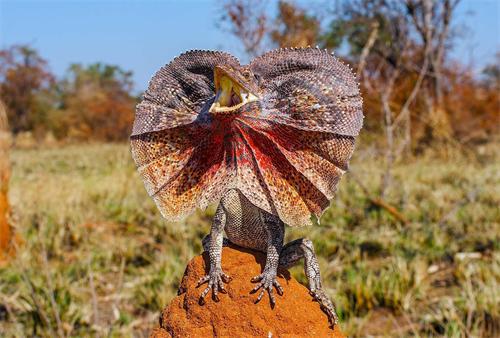
Traditionally, reptiles have been classified into three broad categories—diurnal, nocturnal, and crepuscular (active at dawn and dusk). Lighting setups were often designed based on this simplistic division. Yet, modern field observations and captive studies have demonstrated that these classifications are far from absolute.
- Corn snakes and hognose snakes, typically regarded as nocturnal, are sometimes observed to be active during the day.
- Diurnal cobras may emerge from hiding even in the middle of the night.
- Leopard geckos, considered nocturnal, may begin hunting before sunset in captivity.
- Tree frogs, despite their nocturnal classification, have been documented basking under sunlight during daytime hours.
These examples reveal that reptile activity patterns are not rigid. They are influenced by multiple factors, including body size, ambient temperature, humidity, seasonal shifts, and the availability of ultraviolet radiation. Some species may bask only briefly, or even rely on UV light reflected indirectly from surfaces near cave entrances.
As a result, the old approach of using a “diurnal/nocturnal + rainforest/desert” formula for lighting is no longer sufficient or scientifically accurate.
IV. Ferguson Zones: A More Scientific Standard for Lighting
To address these complexities, researchers developed the concept of Ferguson Zones, which classify reptiles based on their natural microhabitats and exposure to ultraviolet radiation. The system uses the Ultraviolet Index (UVI) as the key measurement, offering more precise guidance for lighting requirements.
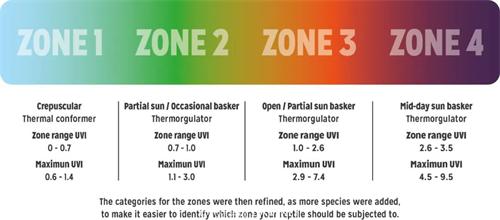
Zone 1: Crepuscular & Shade-Dwelling Species
- Average UVI: 0–0.7
- Maximum UVI: 0.6–1.4
Zone 2: Occasional Sun-Baskers & Partial Shade Dwellers
- Average UVI: 0.7–1.0
- Maximum UVI: 1.1–3.0
Zone 3: Typical Sun-Baskers
- Average UVI: 1.0–2.6
- Maximum UVI: 2.9–7.4
Zone 4: Extreme Sun-Exposed Species
- Average UVI: 2.6–3.5
- Maximum UVI: 4.5–9.5
The UVI accounts for weighted contributions from UVA, UVB, and UVC, making it highly relevant to vitamin D synthesis and reptile health. By referencing Ferguson Zones, keepers can choose the correct type of lamp and placement rather than relying solely on general assumptions or personal experience.
V. Common Lighting Devices and Selection Guide
1. UVB Lamps
UVB lamps simulate mid-range ultraviolet wavelengths (280–320 nm) and are indispensable for captive reptiles.
- Function: Promote vitamin D3 synthesis, aid calcium absorption, prevent metabolic bone disease.
- Typical Ratings: 2.0, 5.0, 10.0 (numbers indicate the percentage of UVB output).
- Applications:
- Tropical or subtropical species → 5.0 UVB
- Desert species → 10.0 UVB
- Effective Range:
- 5.0 UVB: ~30 cm
- 10.0 UVB: ~50 cm
- Usage Time: 8–12 hours per day; exposure can be reduced when natural sunlight is available.
- Replacement Interval: Every 6–12 months, since UVB output declines even if the lamp is still visibly lit.
Drawback: Limited brightness and coverage area, unsuitable as a primary light source for medium to large species.
2. UVA Lamps
UVA lamps emit wavelengths above 320 nm, closely resembling direct sunlight.
- Functions:
- Enable normal color perception, helping reptiles recognize their environment and conspecifics.
- Influence courtship, feeding, and social interactions.
- Combine with heat sources to create basking zones.
- Power Range: 30W–100W
- Recommended Intensities:
- Tropical species: ~0.51 mW/cm²
- Nocturnal species: ~0.2 mW/cm²
Reptiles deprived of UVA may display abnormal behaviors, reduced activity, or even shortened lifespans.
3. Infrared and Heating Devices
Infrared radiation supplies warmth, essential for ectothermic thermoregulation.
- Daytime Heating: Ordinary incandescent bulbs or specialized basking lamps provide both light and heat.
- Nighttime Heating: Ceramic heat emitters are preferred.
- Advantages: No visible light (does not disrupt circadian rhythms), long lifespan (~10,000 hours), efficient heat output.
- Limitations: Provide heat only, without ultraviolet radiation.
When paired with thermostats, ceramic heaters maintain stable night temperatures and prevent excessive cooling.
VI. Scientific Management of Light Cycles
1. Simulating Day-Night Rhythms
- Lamps should remain on for 8–12 hours daily to ensure a clear circadian rhythm.
- For diurnal species, simulate gradual transitions at dawn and dusk to avoid abrupt changes from darkness to brightness.
2. Seasonal Adjustments
- Tropical species can be maintained under a consistent photoperiod year-round.
- Temperate or desert species may benefit from shorter light cycles in winter, mimicking natural seasonal variations.
3. Coordination with Temperature
- During the day, both lighting and heat sources should be provided.
- At night, bright lights should be switched off, with only heating devices operating if necessary.
VII. Practical Tips for Installation and Replacement
1. Lamp Placement
- Ensure safe distances from the animals to prevent burns.
- Avoid placing glass or plastic between the lamp and basking site, as these materials block ultraviolet radiation.
2. Regular Monitoring
- Use a UVI meter to confirm that the ultraviolet output matches the species’ requirements.
3. Replacement Schedules
- UVB lamps: every 6–12 months.
- UVA and infrared lamps: replace as output or brightness declines.
- Ceramic heaters: long-lasting but should still be checked periodically for proper heat production.
Creating a Home That Feels Natural
Reptiles and amphibians remind us of the complexity and diversity of natural ecosystems. For them to thrive in captivity, proper lighting and photoperiod management are essential.
The goal should not be limited to simply providing “a light source.” Instead, we should strive to reproduce the unique features of their native habitats: the dappled sunlight of a forest canopy, the scorching intensity of a desert noon, or the subtle glow of dawn and dusk in wetlands. This is not merely mimicry but a re-creation of the ecological rhythms that shaped their evolution.
Recommend:
Advanced Marine Aquarium Maintenance: Water Quality, Coral Health, and Ecosystem Management
Avian Nutrition and Feeder Science: Optimizing Diets and Funnel Feeders for Wild and Captive Birds
Welcoming Birds to Your Garden: Five Proven Methods for Year-Round Attraction
Breed-Specific Nutrition: Tailoring Diets for Labradors, Persians, and More